

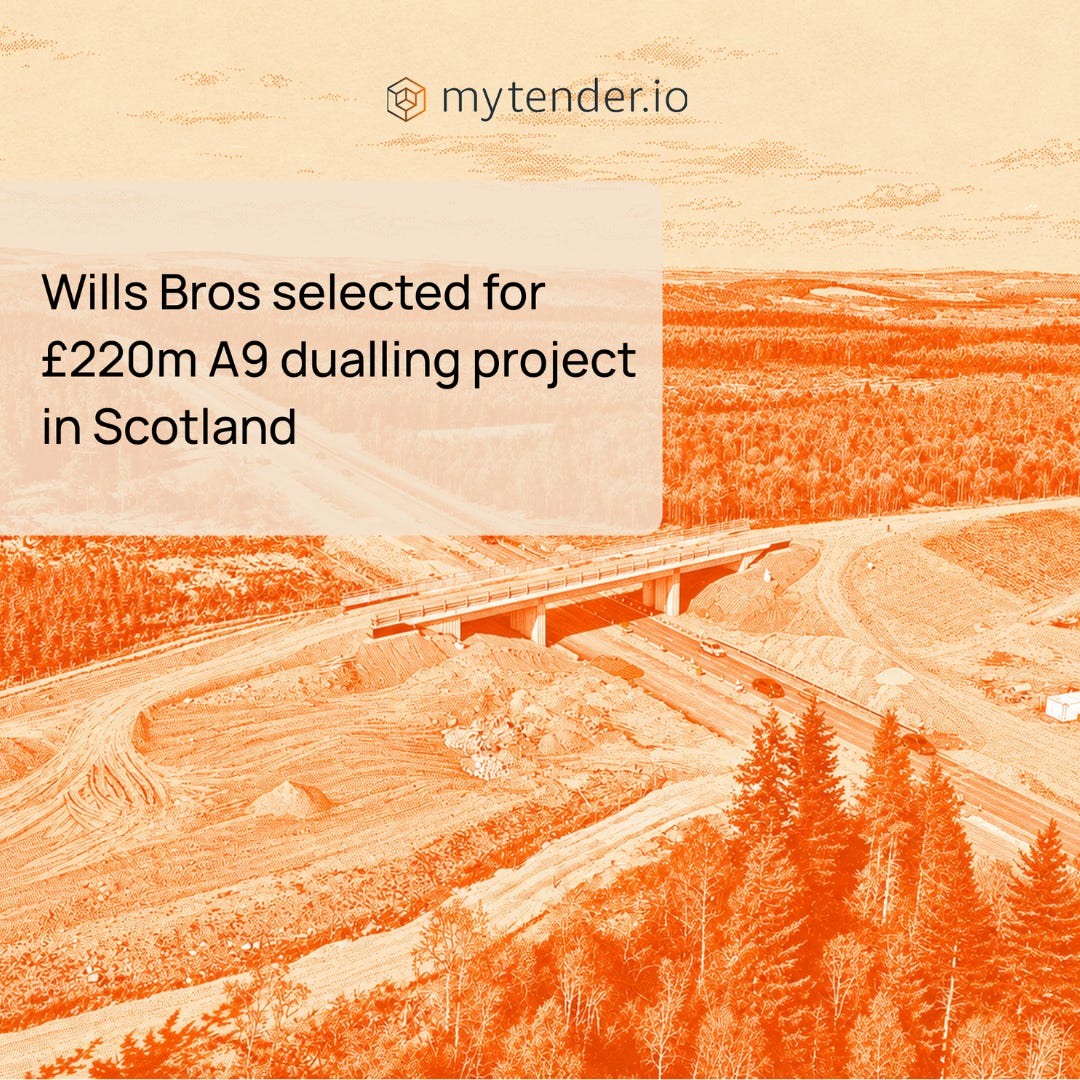
Wills Bros Civil Engineering has been named as the preferred contractor for a £220m road improvement project on Scotland’s A9, marking another major step forward in the Scottish Government’s ambitious programme to upgrade the route between Perth and Inverness.
Transport Scotland has announced its intention to appoint Wills Bros to deliver the 6.4km Pitlochry to Killiecrankie section, subject to completion of the mandatory procurement standstill period.
The contractor secured its position following a competitive procurement process involving Balfour Beatty and Kier. The project was previously estimated at £205m when the three contractors were shortlisted in November 2025.
Major infrastructure improvements planned
The scheme will transform a key section of the A9 into dual carriageway, improving road safety, journey reliability and connectivity across the Highlands.
The construction programme will incorporate new grade-separated junctions, dedicated walking and cycling infrastructure, and flood protection measures designed to improve the resilience of the route.
The development forms part of the Scottish Government’s wider £3.97bn A9 Dualling Programme, which aims to increase the proportion of dual carriageway between Perth and Inverness to 50% by 2030.
Early preparation activities have already commenced around Pitlochry and Killiecrankie, including archaeological assessments, vegetation clearance and the demolition of unoccupied buildings.
Once the contract is formally awarded, Wills Bros will progress mobilisation and detailed construction planning, alongside public engagement sessions to explain the proposals to surrounding communities.
£33m supply chain opportunity for local businesses
Beyond the transport improvements, the project is expected to generate considerable economic benefits for businesses and communities throughout the region.
Approximately £33m in opportunities is anticipated for local SMEs and suppliers, creating potential work across civil engineering, construction materials, plant hire, logistics and specialist infrastructure services.
The programme is also expected to support significant employment and skills development, including:
60 new full-time equivalent jobs
17 graduate opportunities
11 apprenticeship positions
8 opportunities for new entrants to the industry
Wills Bros has also committed £350,000 towards social value initiatives, together with 300 hours of community volunteering and a further 300 hours dedicated to school and STEM engagement.
These commitments reflect the increasing importance of community investment, local economic participation and workforce development within major publicly funded infrastructure contracts.
What this means for infrastructure suppliers
The planned appointment represents another significant investment in Scotland’s transport network, creating potential opportunities for contractors, engineering consultants and specialist suppliers throughout the construction supply chain.
For businesses operating in highways, earthworks, drainage, structural engineering, environmental management and construction support services, large infrastructure programmes can provide valuable opportunities beyond the initial main contractor award.
With multiple sections of the A9 still progressing through the wider investment programme, suppliers have reason to monitor future procurement activity and identify potential partnerships as further work packages emerge.
How mytender can help
Major infrastructure investments like the A9 Dualling Programme demonstrate why identifying procurement opportunities early is so important.
For contractors and specialist suppliers, securing new business involves more than finding published tenders. It requires understanding upcoming projects, assessing where an organisation is best positioned to compete and preparing strong responses when opportunities become available.
mytender helps businesses discover, qualify and respond to tender opportunities with greater speed and confidence.
By combining tender discovery with AI-powered bid writing and collaboration tools, mytender enables teams to reduce time spent searching for opportunities and preparing responses, while maintaining a clear focus on bid quality.
For organisations targeting construction, highways, civil engineering and public sector infrastructure contracts, mytender helps turn tender intelligence into a more focused approach to winning new business.
Discover your next opportunity at mytender.
Check out some case studies below:
Stadium FM
“Stadium FM have been using the brilliant mytender.io platform to save a ton of time and headaches, whilst being able to win more work.”
Professional Security
“The customer service is impeccable... We have saved in excess of 250 hours on just 9 tenders already.”
Empro
“I have worked with Sam and the Team at mytender.io for the last year and have seen the tool develop and transform into an innovative industry-leading platform…”
robidco
“mytender.io is the best AI tender writing tool I’ve seen and used, and way ahead of anything Gemini/Copilot can achieve. I’m still trying to find the right analogy to…”
Paprec
“mytender.io has completely transformed how we approach bid writing. What impressed me most wasn’t just the time savings - though cutting 75% off our tender prep time is huge - it was how the quality actually improved.”
Mount Charles
“We have noticed that the more we use the system the more it reflects our writing style. Based on the feedback from awarded bids we are scoring higher and more consistently on quality.”
The Society of St James
“mytender.io has transformed how we approach grants and tenders, saving huge amounts of time on analysis, documentation, win themes and drafting. I can now focus on quality, model and continuity rather than word counts and compliance checks.”
Source note: This article draws on Construction News
Worth remembering that a preferred bidder announcement is not yet an award, because the standstill period still has to run and unsuccessful bidders can use their feedback to decide whether to challenge. On the £33m supply chain figure, smaller firms usually do best when the tender names the work packages and the social value commitments up front. It is worth asking for those commitments to be reported on during delivery, not just promised at bid stage.